Backhoe OEM vs. Private Label: A Komatsu Excavator Dealer's Honest Comparison
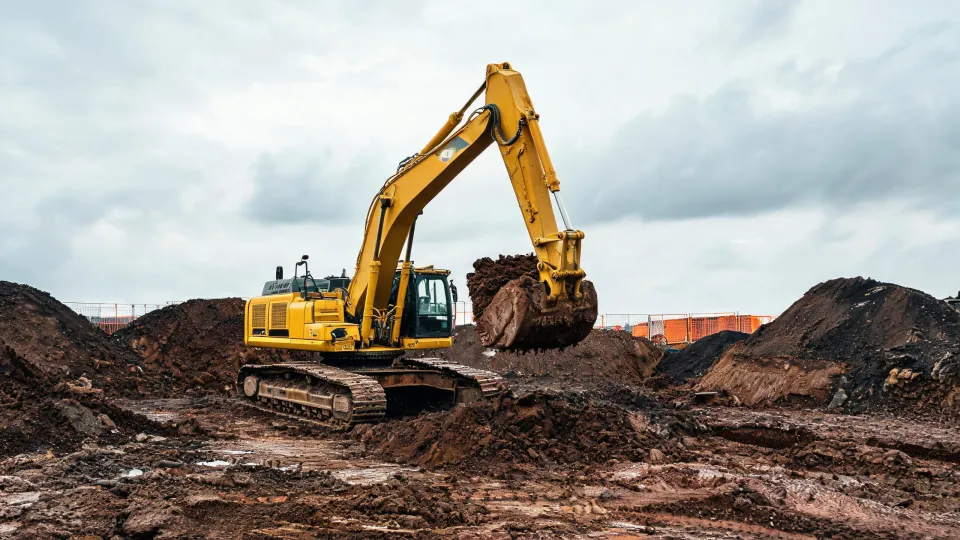
When I first took over purchasing in 2020, I assumed private label simply meant the same machine with a less famous badge and a lower price. That theory collapsed around the time we needed a replacement cylinder for a private-label backhoe and the support process turned a two-day repair into a nine-day wait. A year later, the opposite happened: an OEM rep told us he could not approve a simple configuration change that a private-label competitor accepted without drama. Both sides disappointed me, which is probably why this comparison ended up more useful than I expected.
I'm the office administrator for a 40-person independent construction equipment dealer. We sell, rent, and service Komatsu excavators and wheel loaders, and I handle the vendor side of those machines — purchase orders, warranty paperwork, and parts invoices. In a typical year I process 60 to 80 orders across about eight core suppliers, and I report to operations and finance. I do not run a backhoe myself. I run the process around it.
When management asked me in early 2024 to evaluate adding compact track loaders and backhoe loaders, the real question was never whether to buy machines. It was whether we should put our money behind the compact track loader OEM line from a full-line manufacturer, or buy private label for part of the fleet. The following is how we made that call.
What OEM vs. private label means here
In compact equipment, OEM means the machine was designed, tested, and badged by the manufacturer whose name is on the hood. It is sold through their distributor or dealer network, and the manufacturer has a direct interest in how that machine performs in the market.
Private label is broader. Sometimes it is a machine imported from a specialist factory and sold under a dealer's own brand. Sometimes it is an existing model ordered with a customer's logo and color scheme. Either way, the brand on the machine takes responsibility for warranty, support, and specification decisions.
What most people don't realize is that many established private-label compact lines are built in the same specialized factories that supply global brands. The steel and the pumps may be similar. The service, parts, and warranty policies are not.
The framework we used to compare
We left the bucket-size race at the entrance and compared five dimensions: spec traceability, parts access, warranty claim authority, resale behavior, and customization flexibility. Price was not a dimension. Price is what shows up on the quote. Cost is what shows up after three years of ownership.
1. Spec traceability
Most buyers focus on the breakout force row and completely miss the measurement method column. Breakout force can be measured at the pin or at the bucket edge. Hydraulic flow can be measured at the pump or at the coupler. Those are different numbers for the same machine.
A global OEM can usually produce the test procedure behind a published number. It may take a few emails, but the documentation exists. We found the private-label spec sheets more optimistic and harder to verify. That does not necessarily mean false advertising. It means the assumptions happened in a different factory, under a different process, on a document with no supporting test standard attached.
If you're not sure what I mean, find the wheel loader catalog from a full-line manufacturer such as Komatsu and look closely at how they define rated load and breakout force. A compact track loader OEM spec sheet should be traceable the same way. Not all of them are.
Verdict on this dimension: OEM. The more critical the spec, the more I want a manufacturer that can explain it.
2. Parts access
I use the word access instead of availability on purpose. A part can be in stock at a warehouse 500 miles away, but if it needs three phone calls and five days to move, it is available without being accessible.
For the full-line OEM, we had a local dealer counter and a regional distribution network. For the private-label line, everything came from one central warehouse. Scheduled maintenance was fine. The trouble started when we needed a less common hydraulic fitting and there was no alternate source within driving distance.
The private-label supplier could order it. The OEM supplier could have it in our shop the next morning from a dealer two states away. That difference is not captured anywhere on a spec sheet.
Verdict: OEM wins for machines that work daily. Private label can get close if you stock parts aggressively, but that means carrying inventory on your own balance sheet.
3. Warranty claim authority
Warranty is not a document. It is a decision flow. The real question is who has the authority to approve a claim.
Here's something vendors won't tell you: with an OEM, your claim goes to the manufacturer's regional team, and the process is well defined. With private label, the claim often goes from you to the importer, then from the importer to the factory, then the factory asks for photos, translates the request, and sends back a decision. Every handoff adds a day and a chance for misunderstanding.
We had one private-label claim that was eventually approved, but the process took so much coordination that we stopped counting the labor cost. I'm not going to pretend the claim was rejected. It was simply slow, and slowness is expensive when a machine is down.
Verdict: OEM, if your customers cannot tolerate downtime.
4. Resale behavior
This was the surprise. I expected the private-label discount to show up as better used-market margin because we bought it for less. It did not.
A recognized full-line brand carries lower risk for the next buyer. At auction, people bid on names they can verify, service networks they can trust, and parts availability they can confirm. A private-label machine gets fewer bidders, and fewer bidders mean a lower floor.
Ask anyone who buys used Komatsu excavators from a dealer: the 40-ton class machines hold value partly because the Komatsu name is understood by everyone at the auction. Nobody has to explain what it is. The same logic applies to compact equipment.
Not every private-label model suffers this, and a compact specialist with a strong following can hold value fine. But for a no-name private label, you are not selling iron. You are selling a support story.
Verdict: OEM wins on resale. The discount you save on day one tends to leak out at disposition.
5. Customization and house branding
This is where private label clearly won.
Our private-label supplier was happy to build machines in our company color, put our dealer brand on the chassis, add factory-installed options, and adjust the specification package for our rental customers. The decisions moved fast because the factory was not protecting a global brand identity.
With the full-line OEM, customization was possible but slow. Change requests had to go through product compliance, brand standards, and regional approval. That made sense, but it did not fit our timeline.
Verdict: private label. If branding and customization matter to your business model, this advantage is real.
Where we landed with our Komatsu-focused yard
Here is where the fleet context shaped the final decision. We are strong in Komatsu excavators and wheel loaders. Our 40-ton class units — the machine many contractors still call the Komatsu 400 excavator — drive a lot of rental and used-equipment demand. Customers already know the brand, and our mechanics already know the manufacturer's service platform.
For compact track loaders, we chose the OEM line. Those machines go into daily rental and service environments where downtime is not optional and where resale value is part of the financial plan. The operator who runs a Komatsu 400 excavator is not necessarily looking for a no-name compact loader on the same lot.
For backhoe loaders, we made a different choice and went private label. The backhoe market in our region is price sensitive, and the full-line OEM product was more machine than many of our customers needed. We ordered the private-label unit with our own name on it, stocked the maintenance parts ourselves, and set aside a contingency for warranty work.
That combination sounds contradictory until you think about it by machine class. It was not about OEM being good and private label being bad. It was about which supplier had the best support model for each type of use.
Questions to ask before you choose
If you are going through the same process, ask both sides these questions before anyone sends a PO:
Where is the parts warehouse physically located? What fill rate can you put in writing? Who holds approval authority for warranty claims? What test procedure produced the numbers on your spec sheet? Can you show auction data for this model in my region?
The difference between the best private-label suppliers and the weaker ones shows up immediately when those questions are asked. A private-label supplier with a local parts stock, clear warranty authority, and traceable specs deserves serious consideration.
Bottom line
In 2020 I thought the backhoe OEM vs private label decision was about the badge and the invoice. By 2025, I think about it differently. Machines, steel, hydraulic pumps, paint — they all matter less than what happens after the sale.
The fundamentals have not changed: machines wear, parts fail, and buyers compare prices. But the compact equipment market has evolved. Private-label factories have improved, and full-line OEMs have gotten better at packaging value. What was best practice for a dealer in 2020 is no longer good enough in 2025.
If you can carry your own warranty and parts stock, private label is a legitimate option. If you cannot, the OEM path is worth the premium. Either way, the decision should be made on support structure, not on emotion.