I Handle Komatsu Emergency Parts. Here's Why I Pay for Certainty.
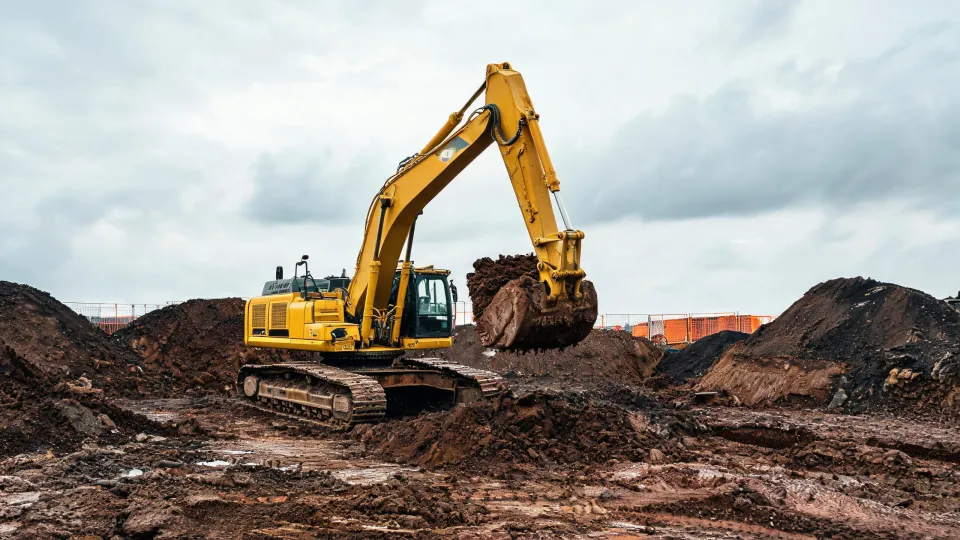
I coordinate emergency parts for Komatsu equipment at a regional dealership. In the last five years, I've logged 200+ rush orders—excavator final drives, bulldozer undercarriages, skid steer loader pumps, you name it. So here's my unpopular opinion:
The most expensive Komatsu part you'll ever buy isn't the factory-authorized one or the overnight-shipped one. It's the "will-fit" part that saves you $600 and then costs you three days.
I'm not saying that to protect a brand. I'm saying it because I've watched the math play out too many times.
Speed is not the premium. Certainty is.
When a fleet manager calls me on a Thursday afternoon with a down Komatsu excavator, they don't ask for the cheapest freight option. They ask, "Can I have it by Monday?" And that's the right question. Because the cost of a missed deadline is almost never the cost of the part.
In March 2024, a customer needed a final drive for a Komatsu PC210LC. The standard truck quote was $260 with a five-day window. The expedited route was $740 with a guaranteed four-hour delivery window. That's a $480 delta. It felt painful. I still said yes.
Why? The excavation contract had a $12,000-per-day LD clause. If we'd missed Monday's pour, the $480 "savings" would have been irrelevant. The owner knew it. That's not an unusual case—it's the pattern I see in almost every critical failure.
Here's the part people get backwards. The assumption is that rush parts cost more because they're harder to get. The reality is that they cost more because they're unpredictable and disrupt planned workflows. The premium works like insurance: you pay it before you need it, and you hope you don't need it. But in an emergency, "probably Friday" isn't a delivery date. It's a risk.
On a Komatsu bulldozer, the same logic applies to undercarriage. A bulldozer that sits idle for a week doesn't just lose productivity—it pushes a whole site schedule. I've seen owners save $2,000 on undercarriage components and then lose $8,000 in rented time waiting for a second shipment.
Skid steer OEM parts: why I push back on "same as OEM"
One of the most common calls I take is for a skid steer loader. A client found a "direct replacement" final drive for $1,800 less than our Komatsu OEM part. The supplier said it was identical. The client said it looked identical. The splines were the same. The bolt pattern matched. The price was hard to ignore.
It did not go well.
The cover interfered with the mounting plate by roughly a quarter-inch. No catastrophic failure—just a machine that couldn't be reassembled. The client then had to pay overnight freight for the OEM part anyway, plus two rental rates, plus the mechanic's return trip. The "saving" turned into a net loss before the machine moved a yard.
I should have seen it coming. Looking back, I should have asked for the engineering drawing before approving the install. But given what I knew then—a supplier with a clean website and a confident salesman—I get why the client trusted it. That's the trap. The damage doesn't happen in the part; it happens in the confidence.
People think OEM parts are expensive because of the logo on the box. That's a misunderstanding. The logo is a result, not the cause. A proper OEM part carries engineering drawings, dimensional tolerances, material certification, and someone to call when it doesn't fit. The brand matters because you can still trace it back to an accountable source.
To be fair, not every aftermarket part is bad. I buy aftermarket filters and cutting edges regularly. But if a part is hidden inside a drive train, or if its failure means another teardown, I want documented certainty, not a smooth sales pitch.
And if you need a skid steer OEM part, insist on proof. Don't take "it's the same" as an answer. Get the OEM number, the drawing, and the warranty terms in writing before you spend the labor hour.
Compact excavator compliance requirements aren't a paperwork formality
This is the topic that doesn't get enough attention. When a compact excavator goes into a municipal or regulated jobsite, emissions compliance is part of the machine's identity. The engine calibration, the DPF or DOC configuration, the sensors, even certain mounting components—they all work together as a certified system.
Here's why that matters in a parts emergency. If someone replaces a component on that system with an uncertified "equivalent," the machine may no longer match the configuration that was certified under EPA nonroad rules. It might run fine in the yard and fail a site inspection on Wednesday.
Compact excavator compliance requirements aren't just about paperwork. They're about keeping the machine eligible for the jobs it was purchased to do. And when a supplier says their part is "EPA compliant" or "OEM compatible," ask them to prove it. Per FTC advertising guidelines (ftc.gov), claims like that have to be substantiated. I don't mean a brochure. I mean the actual certificate, test report, or OEM part number trace.
I've had compact excavator owners tell me they don't need to worry because their machine is small. Horsepower limits don't mean the rules stop applying; they change which certificate applies. When in doubt, verify the part number against the machine's serial number prefix before you install.
"But you're the parts guy—of course you say that"
Look, I hear it. Honestly, if someone on my side of the counter tells you to buy OEM, it's natural to get suspicious. So let me be straight with you.
I've also told customers to buy aftermarket. For pins, bushings, hydraulic hose, wear plates, and other low-risk items, you can save a lot of money. The line isn't "Komatsu only." The line is "uncertainty only where it's affordable."
When I'm triaging a rush order, I ask three questions:
- How much time do we actually have?
- What does the failure cost for every extra day?
- Which part has the least chance of being the next problem?
That's why I'm comfortable endorsing the premium in critical cases. If a $500 max savings means a 5% higher chance of a repeat repair, a fleet owner with utilization targets shouldn't take that bet. If a part is cheap and its failure is annoying but not stopping, go ahead. Different risk, different rule.
Granted, there are times when the OEM part won't be available in time and a verified aftermarket option will. I'll support that too, as long as the supplier can prove fitment and compliance. But that's not an argument for choosing it by default. That's a backup plan, not a strategy.
The bottom line
Here's the thing about emergency repairs: the certainty of the outcome is the product. You're not just buying a part—you're buying the probability that the machine starts on the day it needs to start.
I've watched customers polish a $1,800 savings into a $9,400 loss in three days. I've also watched the same customers pay a rush fee and not even remember it a month later, because the machine just worked.
So my view hasn't changed: When time is the critical constraint, take the option that delivers certainty, even if it costs more. The most expensive Komatsu part is the one that arrives late. The cheapest one is the one that works the first time, exactly when you need it.
Pricing and delivery references are based on my experience in 2024-2025; verify current rates with your supplier. Regulatory references are for general guidance; check official EPA and FTC sources for current requirements.