Why Komatsu Excavators and Wheel Loaders Need a Spec Sheet, Not a Reputation
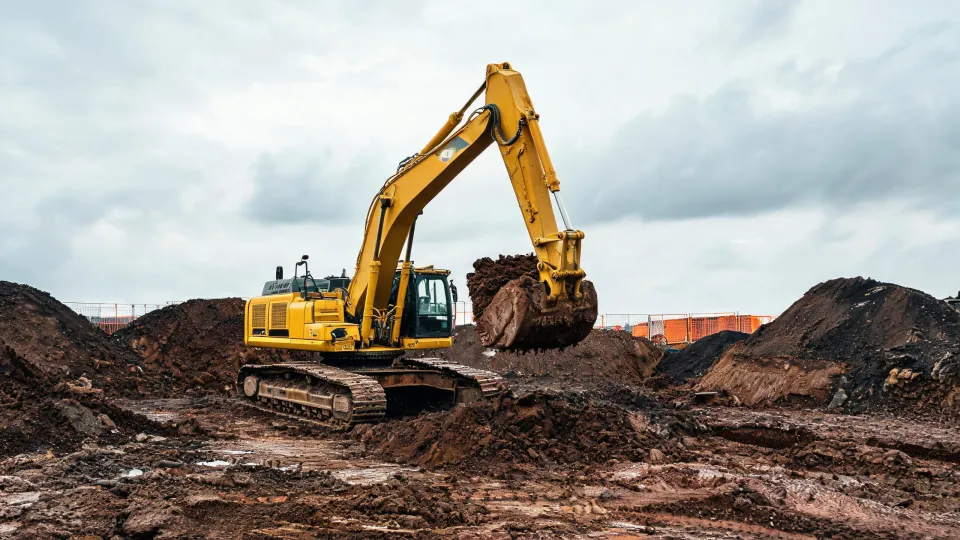
I don't mean to sound harsh, but if you're about to spend six figures on a Komatsu excavator and you can't explain the difference between bucket capacity and breakout force, you're gambling. Not investing. Gambling.
That sounds blunt. I'll keep it blunt. In my role coordinating rush equipment for contractors, I'm the person who gets called when a machine has to be on site in 48 hours. I've handled 200+ requests like that, and the one thing that saves us every time is the spec sheet.
If you've ever had to buy a wheel loader on a short deadline, you know the panic. You search for 'Komatsu wheel loaders,' see photos, and hope for the best. Hope isn't a system. The spec sheet is.
The 'Bulk Loader' Confusion
Let's talk about 'bulk loader' for a second. People search that phrase and usually picture a wheel loader with a big bucket moving gravel, grain, or scrap. But 'bulk loader' isn't a machine category. It's a job description. In agriculture, it can mean a skid steer with a grain bucket. In mining, it can mean a huge front-end loader. In construction, it usually means a wheel loader set up for bulk material work.
That confusion has cost people real money. The 'a loader is a loader' thinking comes from an era when machines were simpler. It's changed. Today, a wheel loader with the wrong bucket configuration can lose a third of its effective capacity on high-density material. The bucket might be large, but the rated payload, breakout force, and counterweight might not handle it. That's not a brand failing. It's a spec failure.
So before you ask for a 'bulk loader,' ask: what material, what density, what cycle time, what production rate? Then look at actual loader specifications.
Loader Specifications Are the Only Honest Conversation
I get it. Spec tables are boring. They're full of numbers that all look important, and nobody explains which ones matter. But here's a truth I learned the hard way: a spec sheet is the only source of truth you get before plastic and steel show up on your site.
Let me rephrase that: a spec sheet is a machine's fingerprint. Two machines with the same model name can behave differently if they have different buckets, booms, or counterweights. I know because I once assumed 'same model' meant 'same machine.' I compared two used wheel loaders, both in the same Komatsu WA series. One had a high-lift boom. The other didn't. If I'd looked only at bucket capacity, I'd have missed the whole story.
When I'm comparing Komatsu wheel loaders or any other loader, I look at four things first:
- Bucket capacity – always check if it's SAE struck or heaped. The difference is bigger than most buyers expect.
- Breakout force – this tells you how hard the machine can dig. It matters more than horsepower.
- Dump height and reach – if your trucks have tall sides, this is the number that actually gets the material in the box.
- Operating weight – a heavier loader is usually more stable, but it also costs more to transport. Be honest about your site.
That's the core of loader specifications. You don't need to memorize the whole brochure. You need these four numbers, plus the model year, because specs change when emissions rules change.
For what it's worth, Komatsu publishes clear spec sheets for every model. I don't have the current sheet in front of me, but as of January 2025, the published Komatsu WA470-8 specification listed a bucket capacity around 4.5 cubic yards in its standard bucket configuration, with other options available. Don't quote the exact number; bucket choices move it. The point is that number is public, easy to verify, and tells you more than any photo.
A Backhoe Loader Specification Guide Without the Homework
The phrase 'backhoe loader specification guide' sounds like a rabbit hole. It doesn't have to be. If you're comparing backhoe loaders, start with five numbers.
- Engine power – net horsepower, not marketing horsepower.
- Backhoe dig depth – check how the manufacturer measures it. Standard reach and extended reach are not the same.
- Loader lift capacity – at full height, not at ground level.
- Hydraulic pump flow – this controls how fast functions move, and it affects daily production more than most people think.
- Transport dimensions – because a machine that doesn't fit on the trailer doesn't help you.
I made the classic new-to-the-industry mistake in my first year. I compared backhoe reach numbers on two loaders without checking that one spec was 'standard reach' and the other was 'extended reach.' One machine looked three feet deeper. It wasn't. The lesson stuck: read the footnotes before you do anything else.
A good backhoe loader specification guide explains what the numbers mean. A bad one just lists brand claims. You want the first kind. Specifically for a backhoe loader, those five numbers clear the fog between a machine that fits and a machine that doesn't.
What If You Just Want a Komatsu?
I hear that a lot. 'I just want a Komatsu. They're solid.' I get it. Komatsu has a strong reputation for a reason. They build excavators and wheel loaders that hold up, and their parts support is generally solid. I'd be lying if I said brand credibility doesn't matter. It does.
But reputation doesn't tell you if a Komatsu excavator in the PC-class has the boom length your job needs. Reputation doesn't tell you if a WA wheel loader has the dump clearance you need for your trucks. Only the spec sheet does. The same logic applies to excavators: the right arm configuration, track gauge, and counterweight are all on that sheet.
So no, I'm not saying ignore brand. I'm saying don't let brand do the thinking for you. An informed customer asks better questions and makes faster decisions.
The Rebuttal I Always Get
'You're overthinking it. Equipment is equipment. Just get the machine on site.'
I've heard that from drivers, foremen, and even some fleet owners. It ends one of two ways: fine, because the machines were simple enough, or expensive, because one wrong number cost a full day of downtime.
In March 2024, a contractor called me on a Thursday afternoon. He needed a wheel loader on site by Monday. The first ad he found said 'large bucket, great machine.' But when I pulled the spec sheet, the breakout force was below what the material required. We found a different machine with a smaller bucket and more breakout force. It finished the job in three days. The first machine would probably have been stuck before lunch.
I'm not going to pretend every spec comparison is perfect. You'll still make mistakes. But you'll make fewer, smaller, cheaper ones.
Bottom Line
If you're shopping for a Komatsu excavator, a Komatsu wheel loader, or a backhoe loader, the spec sheet is not optional paperwork. It's the cheapest insurance you can buy. Read it. Compare it. Ask questions about what you don't understand. And if a seller can't or won't provide the full spec sheet, that's your answer. Walk away.
Trust me on this one. After more rush jobs than I can count, I'd rather read a boring spec sheet than pay for an exciting mistake.