Komatsu Equipment Buying Guide: 7 Things a Procurement Manager Wants You to Know
-
1. What's the real difference between a Komatsu excavator and a backhoe?
-
2. New vs. used Komatsu equipment: what's the smarter financial move?
-
3. What's a final drive, and why does everyone keep talking about it?
-
4. How do I choose between a Komatsu distributor and a broker?
-
5. Are aftermarket parts a good way to save money?
-
6. What's the most important Komatsu track loader specification?
-
7. Do I need a skid steer or a compact track loader?
If you're searching for Komatsu equipment specs or wondering how to pick a distributor, this guide is for you. I've spent the last six years managing procurement for a mid-sized construction firm, tracking every invoice and negotiating with dozens of vendors.
Here are the questions I get asked most often—and the answers I've learned the hard way.
1. What's the real difference between a Komatsu excavator and a backhoe?
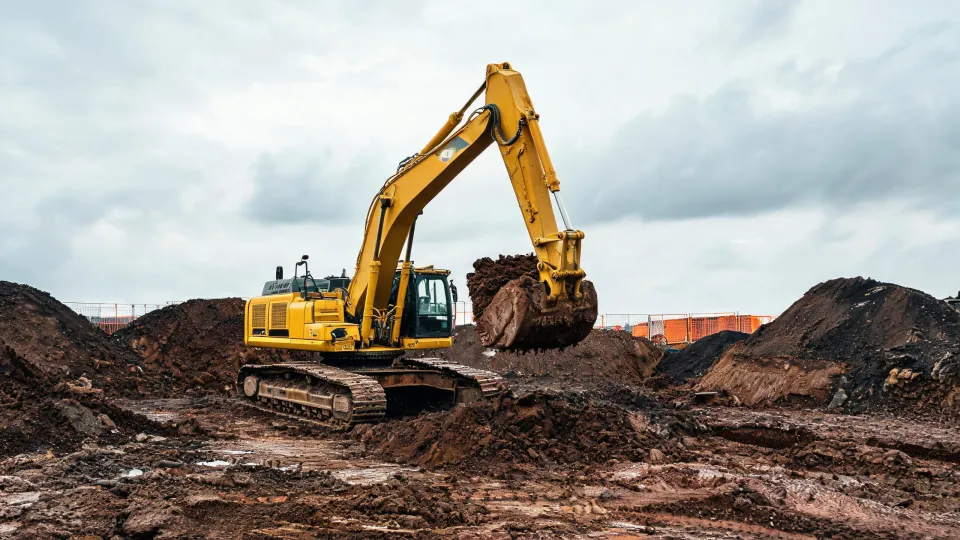
This trips up a lot of first-time buyers. An excavator has a boom arm that digs toward the machine, while a backhoe has a loading bucket on the front and a digging arm on the back. They're built for different workflows.
For most of our jobs, the excavator is the workhorse. It's faster for deep trenching and precise grading. The backhoe is more versatile for smaller sites where you need to load trucks and dig utilities in the same day. From a procurement standpoint, the question isn't which is better—it's which machine will be utilized more. A backhoe that sits idle is a worse investment than an excavator that works daily.
2. New vs. used Komatsu equipment: what's the smarter financial move?
I get why people go for used—budgets are real. But the hidden costs add up. When we compared a used Komatsu excavator against a new one in 2023, the used machine's lower purchase price looked attractive. Then we factored in the extended warranty cost, the older emissions system, and the fact that parts for newer models are easier to source. The total cost of ownership gap narrowed dramatically.
Looking back, I should have built a proper TCO spreadsheet earlier. At the time, I was focused on the sticker price, not the lifecycle cost. If I could redo that decision, I'd invest more time in depreciation calculations. But given what I knew then—nothing about the dealer's service history—my choice was reasonable.
Here's what I tell people: buy new if you're keeping the machine past its warranty and you have a consistent workload. Buy used if it's a second machine or a specialized attachment you need occasionally. Just don't buy used without a full service history. I still kick myself for one purchase where I skipped that step. The result? A $14,000 repair bill three months later that I'm still dealing with.
3. What's a final drive, and why does everyone keep talking about it?
The final drive is the gearbox that transfers power from the hydraulic motor to the track sprocket. It's what actually moves the machine. When someone asks about a Komatsu final drive, they're usually asking about the whole assembly—motor, gearbox, and housing.
Why does this matter? Because final drive failures are one of the most expensive repairs you'll face. A replacement for a Komatsu PC200 can run $6,000–$12,000 depending on whether you buy OEM or aftermarket. In my experience, OEM final drives are worth the premium. I've seen aftermarket units fail in under 1,500 hours, which makes the cheaper price a false economy.
The way I see it, the final drive is the heart of the machine's mobility. You wouldn't buy a truck with a rebuilt transmission and expect a clean maintenance record. The same logic applies here.
4. How do I choose between a Komatsu distributor and a broker?
In 2024, when we were sourcing a new wheel loader, I compared quotes from three distributors and two brokers. The brokers had lower upfront prices. But here's what they didn't advertise: delivery fees that added $1,800–$3,200 to the total, and no support if the machine arrived with issues. The distributor's price included delivery, a pre-delivery inspection, and dedicated support for the first year.
That 'cheap' broker option would have cost us $4,200 more in hidden fees and potential downtime. I've learned to ask 'what's NOT included' before 'what's the price.' The vendor who lists all fees upfront—even if the total looks higher—usually costs less in the end.
Look for a distributor that: has a physical parts depot, offers factory-trained technicians, and can show you their current Komatsu inventory rather than a vague 'we can source it' promise. Track loader specifications are easy to find online, but a good distributor is hard to replace.
5. Are aftermarket parts a good way to save money?
Sometimes. But it depends on the part. Filters, belts, and wear items are usually fine from quality aftermarket brands. When it comes to final drives, hydraulic pumps, and electronic components, I stick with OEM Komatsu parts.
The problem with cheap parts isn't always the part itself—it's the risk. If a $300 aftermarket sensor fails and damages a $8,000 pump, your savings evaporate. That's not a hypothetical. It happened to us in Q2 2024, and the repair bill wiped out a year's worth of parts savings.
To be fair, there are good aftermarket options for older machines where OEM parts are backordered for weeks. But I'd rather wait a week for the right part than install a gamble and risk a week of downtime when it fails.
6. What's the most important Komatsu track loader specification?
Everyone fixates on horsepower and bucket capacity. The spec that actually matters more is operating weight. It directly affects stability, lifting capacity, and ground pressure. A machine that's too light for your job site will struggle with material breakout and feel unstable on slopes.
For example, comparing two Komatsu track loader models, the one with 10% more operating weight can usually lift 15–20% more in real-world conditions, even if the hydraulic specs look similar. Don't ask me why the marketing sheets don't highlight this—I've built a cost calculator after getting burned on this twice.
The other spec I check now is hydraulic flow rate, not just pressure. Flow determines how fast the attachment works. Higher flow means faster cycle times. Faster cycle times mean lower operating costs per yard of material moved. That's the number that pays your bills.
7. Do I need a skid steer or a compact track loader?
This is another common question. Skid steers are cheaper, faster on hard ground, and easier to transport. Compact track loaders have better traction, lower ground pressure, and float across soft or muddy sites. If your work is mostly on pavement or improved lots, a skid steer is the financially smarter choice. If you're dealing with dirt, mud, or slopes, the track loader's versatility wins.
Here's the catch. A compact track loader costs roughly 20–30% more than a comparable skid steer. And tracks wear out—plan on replacing them every 1,500–2,500 hours depending on conditions. That's a significant operating cost people forget to budget for. I've seen companies buy track loaders, run them on clean concrete all day, and burn through expensive track pads for no benefit. Match the machine to the environment, not to the brochure.
Prices as of late 2024; verify current rates with your local Komatsu dealer.