Why Komatsu's 'Limits' Make It a Better Equipment Supplier—and How to Evaluate Small Excavator Manufacturers
I'll state my position plainly: Komatsu's most valuable asset isn't any single machine on its lineup sheet—it's the willingness to tell you when it's not the right fit. In my role coordinating equipment procurement and rush parts deliveries for contractors and dealer networks, I've handled at least 150 time-critical orders over eight years—maybe more, I'd have to check the system. And the suppliers I trust most are rarely the ones promising to fix everything.
That background has given me a fairly cynical view of vendor claims. It might sound odd to say it about a brand like Komatsu, founded in Tokyo in 1921 and now one of the largest construction equipment manufacturers in the world. But I hold this view precisely because of what Komatsu doesn't do. It doesn't try to be the cheapest. It doesn't pretend every product category is its specialty. And that honesty is worth more than any brochure promise.
The "Full-Line" Fallacy
Here's something vendors won't tell you: "full-line supplier" is a marketing phrase, not a manufacturing guarantee. Walk through almost any brand's production story and you'll find OEM partnerships somewhere in the chain. That's especially true in compact equipment. When buyers research skid steer loader oem arrangements, they're often surprised at how many familiar badges sit on machines built by contract manufacturers.
There's nothing wrong with that—some of the best compact loaders come out of serious OEM engineering. What matters is whether the brand is transparent about it. A few years ago (this was back in 2023), I quoted a skid steer loader for a landscaping contractor. The sales rep talked as if the machine were designed in his own engineering center. It wasn't. I found out through a parts manual that cross-referenced another manufacturer's part numbers. The machine ran fine, but the credibility hit was permanent—and we haven't bought that brand since.
Komatsu, to its credit, doesn't play that game with the lines I've dealt with. When I've asked directly whether they manufacture or source certain components in a compact loader, I got a straight answer. That candor sells more equipment than any rebranded product ever will.
What a Komatsu Excavator's History Actually Buys You
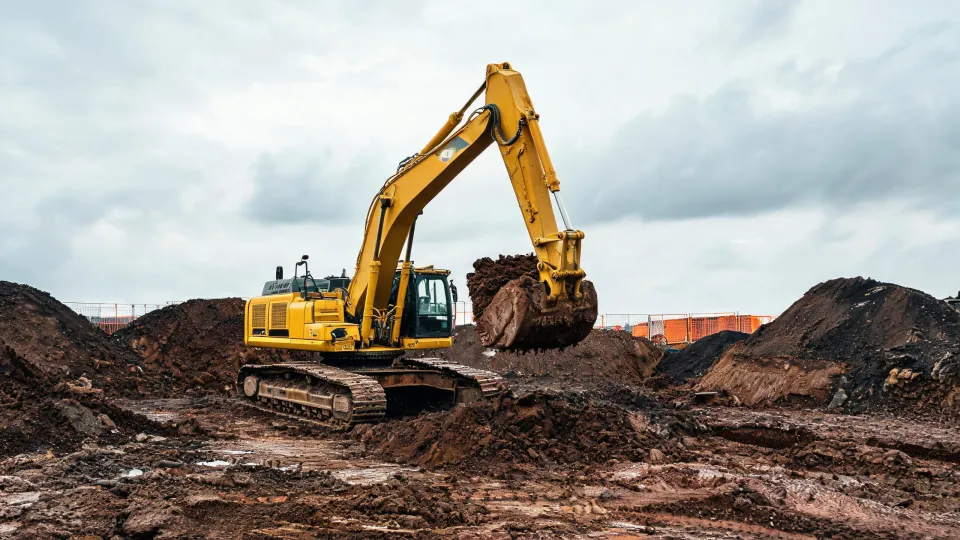
Now the komatsu excavator line specifically, because this is where the specialist mindset shows its ROI. Komatsu has been developing hydraulic excavators for over half a century. That sounds like a press release line, but it carries weight in the field: technicians at a dealer with a deep installed base don't guess when a hydraulic fault code appears. They've seen it. They know whether it's a sensor calibration, a sticky valve, or a solenoid failure.
In March 2024, a client called at 3:40 PM on a Friday with a downed excavator and a Monday morning deadline on a job site that carried a penalty clause for every idle day. Normal lead time for the final drive assembly we needed: about ten days. We found a unit in a dealer's inventory two states away, paid an absurd overnight freight bill, and staged it by Saturday afternoon. That search worked because the machine platform had years of production volume behind it—parts exist because the machines exist everywhere.
Is every Komatsu dealer that nimble? Honestly, I don't know. But the widespread installed base is what makes the good ones fast. A specialist builds a parts ecosystem that a generalist, low-volume brand simply can't support.
The Bulldozer Manufacturer Test
I use a simple test when someone claims to be a serious bulldozer manufacturer: ask for the hydraulic cylinder bore diameter on their flagship model, then ask how the hydraulics handle a stalled blade load. The first question separates actual manufacturers from badge assemblers. The second separates engineers from order-takers.
Komatsu's dozer lineup—from utility-class machines to the D375 mining dozer—built its reputation in mining and heavy construction over decades. I want to say there are still older D-series units running in mining fleets today, but don't quote me on the fleet numbers. The broader point: a dozer lives or dies by its undercarriage and blade hydraulics, and you only learn to build those well by building a lot of them, failing a little, and fixing the next generation. That's not something a low-volume manufacturer can shortcut.
How to Evaluate Small Excavator Manufacturers
Not every contractor needs a Komatsu, and I'll defend that. A compact excavator from a small manufacturer can be the right business decision. That's why I get asked how to evaluate small excavator manufacturers so often. Here's the checklist I use—which went through a painful revision in 2023, when a supplier's "max dig depth" was measured from the bucket teeth instead of the standard pin location. Nearly 30 cm of difference, discovered after the client's trench plan was already filed.
- Ask who makes the hydraulic components. If they can name the pump and valve suppliers, you're dealing with a real integrator. If they can't, that's a red flag.
- Get the parts fill rate in writing. "We ship within 48 hours" means nothing. Ask what percentage of parts ship from stock, and from which warehouse.
- Verify spec sheet measurement standards. Compare dig depth and reach against a major brand in the same class. If the numbers look dramatically better, check the measurement point.
- Ask a technical question and see who answers. If your only technical contact is the sales rep, you're not buying engineering—you're buying a box.
- Ask what they refuse to do. This surprises people. A small manufacturer that says "we don't compete in the 20-ton class" knows its boundaries. That same honesty will surface when a defect occurs. You'd rather hear "we need to research this" than "it's normal, don't worry."
The One-Stop-Shop Objection
I can predict the pushback: "A single supplier simplifies procurement." Sure, for commodity items—filters, buckets, grease. The argument collapses with capital equipment. When I follow komatsu mining news about autonomous haulage systems, I don't see an afterthought. I see a company that has run driverless haul trucks in open-pit mines for over a decade and expanded its mining business with the Joy Global acquisition in 2017. That's focused engineering for an environment where downtime costs millions per day.
No one-stop-shop generalist can match that depth in every category. A vendor who says "we can do everything" usually means "we can order anything." That's not the same as building, supporting, and standing behind the machine.
"The vendor who says 'this isn't our strength—here's who does it better' earns my trust for everything else."
The Bottom Line
After years of emergency orders, failed promises, and an occasional 11 PM voicemail, my position hasn't changed. A supplier that knows its boundaries is a supplier you can trust with your downtime. Komatsu may not build every attachment, may not have the lowest initial quote, and may not chase every product category. That's precisely the point. The focus is what makes its excavator and bulldozer lines deep enough to warrant the investment—and it's the standard you should apply to every small excavator manufacturer you evaluate.