Komatsu Excavator Buying Guide: Komatsu 360 Excavator, Bulk Wheel Loaders, Compact Track Loader OEM, and Mini Excavator Compliance Requirements
-
Scenario 1: The Komatsu 360 excavator as a production tool
-
Scenario 2: Mini excavator compliance requirements are not just paperwork
-
Scenario 3: Bulk wheel loader decisions are cycle-time decisions
-
Scenario 4: Compact track loader OEM means a supply commitment, not a one-unit order
-
How to tell which scenario you are in
-
The final number should be transparent
Machinery buying usually starts with a model number. Mine stopped starting there in 2023, when a quote for earthmoving equipment looked acceptable until freight, delivery, and setup fees appeared after I asked for them. The machine we thought we were buying cost 11% more than the first sheet said. I manage procurement for a 120-person material supply operation, and for the last six years I have kept the same cost-tracking spreadsheet on every equipment purchase, repair, and invoice.
That does not make me an equipment expert in the sales-floor sense. It makes me the person who has to explain after seven months why a machine cost more than the approved capital number. I would rather earn that trust with a boring spreadsheet than with a colorful presentation.
There is no single best Komatsu machine for every company. Different buyers need different advice. The way I see it, the decision usually splits into four scenarios:
- A full-time production job with truck loading, heavy digging, or mass excavation? The Komatsu 360 excavator class deserves your attention.
- Urban, utility, or tight-space work with air quality rules? Mini excavator compliance requirements become part of the purchase.
- Aggregate, sand, gravel, feed hopper, or stockpile work? You are buying a bulk wheel loader.
- A rental distributor or private-label equipment program? Compact track loader OEM is a different conversation entirely.
Scenario 1: The Komatsu 360 excavator as a production tool
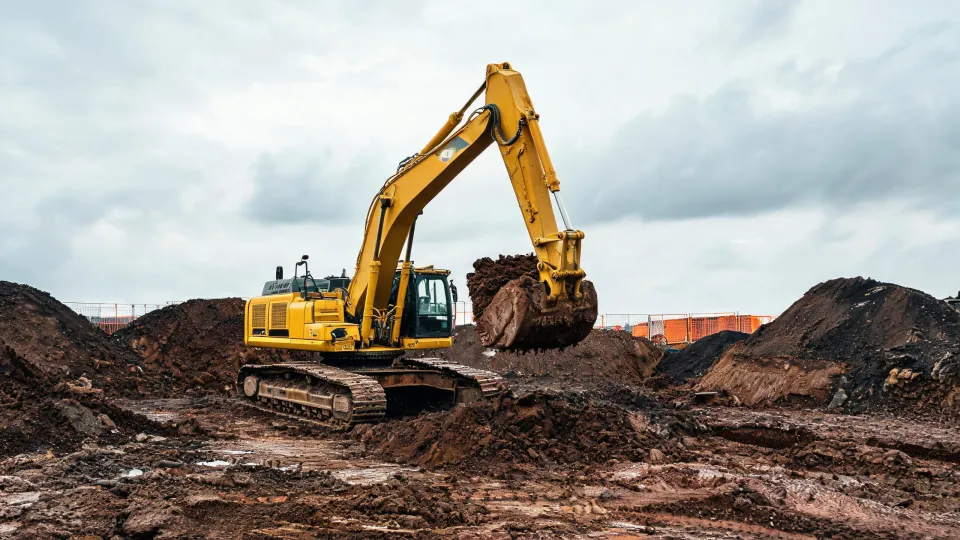
If someone says they are looking for a Komatsu excavator, the first question I ask is not horsepower. It is utilization. The Komatsu 360 excavator class is a serious production machine in the 36-tonne range, often bought for truck loading, mass excavation, pipe work, and foundation jobs. That type of machine earns its keep when it works a real schedule. When it sits, it still consumes payments, insurance, and ground space.
The advice that feels good is to buy bigger and grow into it. If you ask me, that is backwards for most first-time buyers. Buy enough for the work you can see and quantify. Rent or use a smaller Komatsu excavator until the workload proves it can keep a 36-tonne machine busy. Granted, a larger machine is productive when it is actually working. But idle capacity is still a cost.
For used machines, the sticker price compared with a dealer-maintained unit is never enough. A used Komatsu 360 can be a smart buy when it comes with service records and final-drive history. I once compared two similar 36-tonne machines: the lower-priced one looked reasonable until I added new final drive and undercarriage costs to the spreadsheet. After that, it was not the bargain.
Before comparing quote numbers, ask what else should be in the final payment: counterweight, bucket, hydraulic piping, freight, assembly, and dealer prep. If the quote does not list those items, assume they are either extra or not included.
Scenario 2: Mini excavator compliance requirements are not just paperwork
Mini excavator decisions are often driven by digging depth, arm length, and transport weight. But mini excavator compliance requirements can decide whether the machine is even allowed on the job site.
Most new diesel-powered mini excavators sold in the United States run engines certified to EPA Tier 4 standards. According to EPA guidance at epa.gov, certified nonroad engines need to have proper engine labels and matching serial numbers. If a dealer cannot produce that information, that is a red flag.
State and local rules add another layer. California Air Resources Board rules can apply to off-road fleets, and some cities have noise restrictions that limit work hours. In those situations, a mini excavator that meets federal emission standards may still need additional local paperwork. I have learned to ask about those details before signing anything.
We did not have a formal compliance intake checklist until one of our mini excavators sat at a rental account for a day because the paperwork folder lacked the label photo. That missing page cost us one billable day and one annoyed customer. Now every mini excavator quote I review includes a clear answer to this question: what is included for compliance documentation, dealer support, and local permitting? If the answer is vague, the price is not real.
The spec to check is not only arm length. In a city or regulated environment, mini excavator compliance requirements can matter more than bucket size.
Scenario 3: Bulk wheel loader decisions are cycle-time decisions
When I hear the phrase bulk wheel loader, I picture a pile of gravel, a hopper, and a line of trucks. Bulk material work is not about moving one enormous load. It is about repeating a short cycle: load, reverse, dump, return. The real number that matters is cost per ton moved, not heaped bucket capacity alone.
The common instinct is to buy one size larger because larger feels safer. I usually steer in the opposite direction unless the daily volume really justifies it. More metal means more fuel, bigger tires, higher purchase price, and no benefit if the bottleneck is truck arrival time or site layout. Match the machine to the cycle, not to the idea of owning the biggest unit in the yard.
For a bulk wheel loader, I want to see the expected tons per hour at the actual density of the material being moved. I also want tire costs and replacement intervals on the spreadsheet. Tires are often one of the largest maintenance expenses on a wheel loader. If the dealer can show cycle-time assumptions and operating costs, that tells me more than a spec sheet with a maximum bucket volume.
Hidden costs in a wheel loader quote can hide in plain sight: bucket edges, counterweights, ride control, scales, quick couplers, and delivery. Ask each vendor to put those line items on the quote even if they seem small. They are not small when added together.
Scenario 4: Compact track loader OEM means a supply commitment, not a one-unit order
The term compact track loader OEM has two common procurement meanings. For rental distributors, it can mean having a manufacturer produce or support a private-labeled compact track loader line. For a maintenance operation, it can mean sourcing OEM-grade parts such as undercarriage and final drives for an existing compact track loader. Both are relationship purchases, not simple one-unit orders.
If you only need one compact track loader for your own jobs, do not go down an OEM or private-label path. Buy a standard machine from a local dealer with factory warranty support. A standard dealer-stocked unit is easier to resell, easier to get parts for, and easier to move if the machine turns out to be the wrong size.
The OEM conversation becomes relevant when you need a consistent fleet, a branded rental lineup, or a long-term supply arrangement. A full-line manufacturer brings credibility there, but the per-unit price is only the beginning. Ask questions like: who handles the warranty claim, where are the parts stocked, what is the final drive lead time, and what support is written into the agreement? If the supplier will not put support terms in writing, the low unit price is not worth the risk.
How to tell which scenario you are in
If you are not sure which buyer scenario fits, answer these four questions before asking for quotations:
- Will this machine generate revenue during most working days? If yes, buy based on the complete cycle. If no, rent before buying.
- Does a regulation apply to the job site, the machine class, or the region? If yes, compliance questions come before bucket size.
- How far is the nearest support location? If parts and service are far away, factor freight and downtime into the total cost.
- Is every quote itemized? Ask each vendor: What is not included? If the answer is anything other than nothing, keep asking.
The final number should be transparent
A Komatsu 360 excavator can be the right answer in one company, while a mini excavator with the right compliance package is the right answer in another. A bulk wheel loader may be the profit center in a material yard, and a compact track loader OEM supply arrangement may be the smart move for a rental company with enough volume.
Komatsu has earned credibility because of its full-line equipment and support network. But any equipment purchase can be damaged by hidden fees and unclear quotes. The vendor who lists all fees upfront, even if the total looks higher, is usually the vendor that costs less in the end. Every hidden fee looks small until it is added to financing, utilization, and maintenance. That is why I will always take a transparent all-in number over a low number that needs a few more phone calls to explain.