OEM vs. Private Label Isn't the Question. Verified Specs Are.
-
What "Komatsu 360 Excavator Specs" Missed on a Used PC360-8
-
The Track Loader Catalog That Was Technically Right (and Still Cost $4,450)
-
Mini Excavator OEM vs. Private Label: The Question I Didn't Ask
-
I'm Not Telling You to Buy Genuine, and I'm Not Telling You to Buy Private Label
-
Ask the Question in the Right Order
Right up front, here is my opinion: you're starting the OEM vs. private label conversation too early. The brand question should come after you've verified three things: the serial-number-specific configuration of the machine, the revision of the spec sheet or catalog in front of you, and the complete published specs for any private-label component. I skipped those steps for years. Since 2017, while handling parts procurement for a mid-sized earthmoving fleet, I've personally made and documented 12 significant mistakes totaling roughly $61,000 in wasted budget. Now I maintain our team's pre-order checklist. These are the three failures that built it.
This applies to any piece of iron, but it's especially true with Komatsu equipment because the model families and configurations look so similar. Whether you're buying a Komatsu excavator attachment, a compact track loader component, or a mini excavator final drive, the model name is not a specification.
What "Komatsu 360 Excavator Specs" Missed on a Used PC360-8
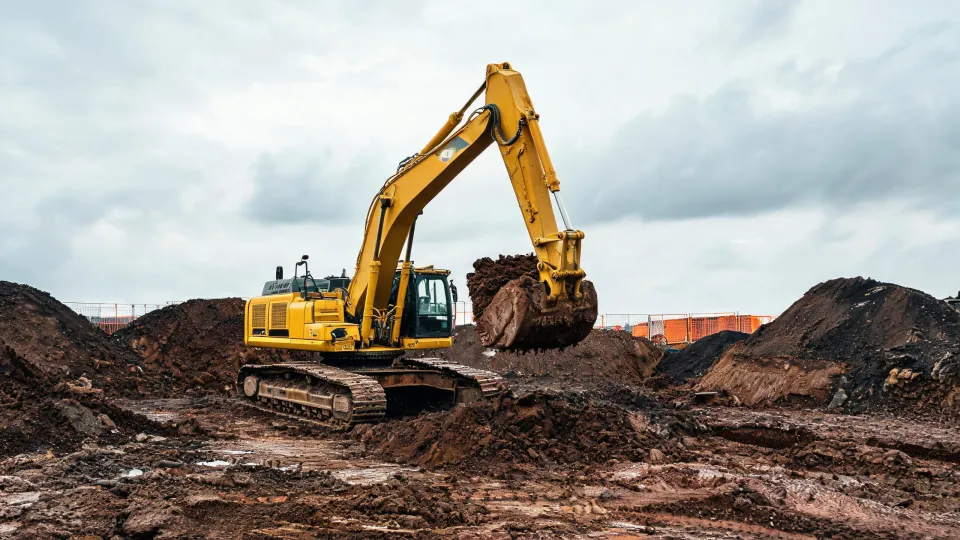
In April 2021, I was evaluating a used Komatsu PC360-8 for a highway grading contract. The broker's packet included a spec sheet, and it looked complete: model, hours, operating weight, arm length, bucket capacity, the whole standard list. The numbers all seemed correct for a 36-ton Komatsu excavator. They didn't match the machine, though.
My gut flagged it first. Something about the rear end sat low, as if the counterweight package was lighter than the sheet claimed. The numbers said otherwise, and I talked myself out of the instinct because the price was attractive and the paperwork looked clean. I signed.
The spec sheet was accurate, just for a different configuration of the same model. The counterweight on the actual machine was roughly 900 kg lighter than the sheet stated, and that difference mattered for the lifting chart and stability calculations on the contract. We caught it during commissioning. Fixing the counterweight package and re-verifying the machine's build cost about $6,200 and 11 days of delay. The broker wasn't running a scam; they had pulled a generic spec file and never checked the serial-number record. I was the one who was supposed to check.
That's the trap in searching "komatsu 360 excavator specs" and treating the results as one fixed truth. These specs vary by configuration, guard package, arm option, and counterweight. The model is the beginning of the conversation, not the end. A serial-number-specific record from a Komatsu dealer or the OEM's official system is the only document you should base a purchase on.
Model name identifies the machine family. Serial number identifies the machine.
The Track Loader Catalog That Was Technically Right (and Still Cost $4,450)
A year earlier, in March 2019, I made the same mistake in reverse, this time with a Komatsu compact track loader. I ordered an undercarriage service kit: 18 line items from the track loader catalog, totaling around $4,700. Rollers, idler components, bolts, seals. I checked each part number twice against the catalog's exploded view.
Every number matched. That was the problem. We ran two track loaders from the same model family, built six months apart. Komatsu had changed the undercarriage design between serial number ranges, and I had searched the catalog by model alone. The parts I ordered were correct for the older revision. Perfect parts, drawing-verified, intended for our other machine.
The vendor restocked what they could. The restocking charge was $1,850, and the rental machine we needed while waiting for the correct set cost $2,600 before the job was back on schedule. The catalog wasn't lying. I never asked which serial range it was displaying. This format is still in use today, Komatsu included, as of January 2025, so the habit matters more than any single fix: always match the catalog by serial number prefix, not just by model name.
Mini Excavator OEM vs. Private Label: The Question I Didn't Ask
In August 2022, we needed five final drive assemblies for our Komatsu PC09 mini excavators. The OEM quote was $3,450 per unit; the private-label quote was $2,300. Those figures came from two supplier quotes in August 2022, and prices have moved substantially since, so verify current rates before relying on them. Across five machines the saving was $5,750, and the spreadsheet told me to take it.
My gut pushed back. The private-label vendor's spec sheet listed torque and speed but left out motor displacement and maximum pressure, the two numbers that would tell me whether the drive actually matched the machine's hydraulic system. I asked. It took nine days for them to reply, and the answer still didn't include the missing values.
I approved the order anyway. Even after approving, I kept second-guessing. What if the specs were incomplete because they didn't want me to compare? I told myself the warranty covered it and moved on. The two-week lead time felt like a month, but the stress didn't really stop until delivery.
Two of the five drives started running hot just past 600 hours. The supplier did honor the warranty on both units, which I'll give them credit for. But our labor and replacement rental costs for those two machines came to roughly $7,400. When we opened the failed drives, the thrust washers inside weren't the grade our own hydraulic test data indicated the drive needed. It wasn't a random failure. It was a specification mismatch.
Now I want to be precise: private label wasn't the mistake. I've seen private-label components outlast their OEM equivalents. The mistake was accepting an incomplete spec sheet because the price told me what I wanted to hear. The OEM vs. private label question isn't settled by loyalty or by savings. It's settled by whether the vendor can document what they're actually selling.
I'm Not Telling You to Buy Genuine, and I'm Not Telling You to Buy Private Label
Two objections usually come up. First: "so you're saying buy OEM only." No. The day after the final drive teardown, I ordered a private-label hydraulic component for a wheel loader from a different supplier. That supplier provided application data without me having to ask twice, and the component has more than 1,700 hours on it with zero issues.
Second: "this level of checking is unrealistic for a small shop." It took me about two hours to turn these failures into a checklist. Since April 2019, our team has used it on every order over $500. Between April 2019 and December 2020 alone, it caught 47 potential errors: wrong revisions, superseded part numbers, missing serial prefixes. None of that required a full-time engineer. It required a habit.
- Confirm the machine serial number from the plate, not the registration list.
- Check the spec sheet or catalog revision date against that serial number range.
- Match every part number individually, and don't assume a model name means a part fits.
- If a supplier can't produce complete specs for a private-label item, treat their quote as incomplete, not cheaper.
Ask the Question in the Right Order
My position hasn't changed: verify identity and documentation before you compare brands. An informed customer asks better questions and makes faster decisions. An uninformed customer just picks a side and hopes.
Ask for the serial-number-specific configuration first. Ask for the revision second. Ask for the complete spec data third. Then ask what it costs. If I had followed that order, three of my most expensive mistakes would never have happened. I still kick myself for not learning it sooner, but at least the checklist has made sure I only had to learn it once.